Obsessive Compulsive Disorder
(OCD) Therapy in Naperville.
Break free from the cycle of doubt and compulsion
OCD isn't about being tidy. It's about terrifying uncertainty. We use Exposure and Response Prevention (ERP)—the gold standard treatment—to help you face your fears and reclaim your life.
More Than Just "Being Neat"
Obsessive-Compulsive Disorder is one of the most misunderstood conditions. It's not about wanting things organized. It's about terrifying uncertainty—the crushing doubt that something awful will happen unless you perform a specific ritual or avoid a trigger.
The thoughts feel real. The urge to check, wash, or seek reassurance feels overwhelming. But these compulsions only provide temporary relief, trapping you in a cycle that gets smaller and smaller.
Why Talk Therapy Often Fails
Traditional talk therapy often makes OCD worse by providing reassurance ("You're a good person," "That won't happen"), which temporarily calms anxiety but feeds the OCD cycle.
That's why we use Exposure and Response Prevention (ERP). As the most targeted, evidence-based modality within Cognitive Behavioral Therapy (CBT), ERP teaches your brain that you can tolerate uncertainty without falling apart—the only way to find lasting freedom.
Specialized OCD Care in Naperville
OCD requires specialized training that many general therapists simply do not have. Misdiagnosis is common, and well-intentioned advice like 'just stop thinking about it' only adds to the suffering.
Our clinic, located on Ogden Avenue (East adjacent to Andy's Frozen Custard), provides a dedicated, expert setting for OCD and ERP therapy. Situated between Washington and Columbia St, our location is easy to reach from anywhere in Naperville and the surrounding western suburbs.
Whether in-person at our Naperville clinic or through secure telehealth across Illinois, we help you step-by-step through the ERP hierarchy until OCD no longer controls your choices.
Sound Familiar?
You might be a good fit if...
- You have intrusive thoughts that feel horrifying, taboo, or "wrong"
- You spend hours each day on rituals or mental compulsions
- You avoid people, places, or situations because of your obsessions
- You constantly seek reassurance but the relief never lasts
- You've been told to "just stop" or "think positive" (and it doesn't help)
- You feel ashamed of your thoughts and haven't told anyone the full truth
- You're ready for treatment that actually works—even if it's uncomfortable
OCD Wears Many Masks
Types of OCD.
OCD can attach to anything you care about. We treat all subtypes, including:
Our Approach
Evidence-based treatment.
We use the gold-standard treatment to help you break free from the OCD cycle.
ERP Therapy (Exposure & Response Prevention)
The gold standard. Gradually face feared situations without doing compulsions. Teach your brain that you can handle uncertainty.
ACT (Acceptance & Commitment Therapy)
Learn to accept the presence of unwanted thoughts without engaging with them, while focusing on lived values.
Inhibitory Learning (Advanced ERP Protocol)
Design exposures to maximize new learning that out-competes old fear associations, leading to durable change.
The ERP Process
The treatment process.
Assessment
Map out your obsessions, compulsions, and avoidance behaviors in granular detail.
Hierarchy Creation
Rank feared situations on a 1-10 distress scale. You always know what's coming and stay in control.
Exposures
Gradually practice facing fears together in sessions—starting with manageable challenges and building up.
Response Prevention
Learn to tolerate the urge to do compulsions until the anxiety comes down on its own.
Relapse Prevention
Build tools to maintain your gains and handle new OCD themes if they arise.
Our Specialists
Meet your OCD experts.
Not all therapists are trained in ERP. Ours are. Here's who can help:
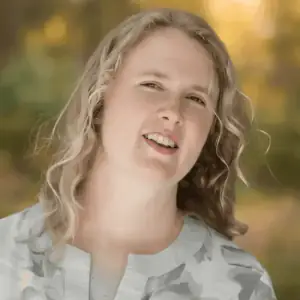
Sara Banks, LCSW
Specialties
Practice owner with extensive ERP training. Specializes in OCD, intrusive thoughts, and anxiety disorders.
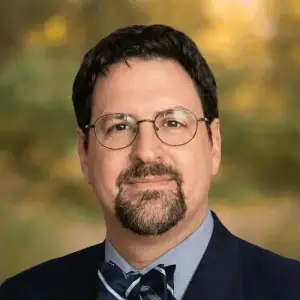
Dr. Jonathan Woodin, PsyD
Specialties
Clinical psychologist using ERP and ACT for OCD and anxiety. Values-based, non-judgmental approach.

Nagla Mostafa, LMFT
Specialties
15+ years experience treating OCD with ERP in relationship and family contexts.

Takeisha Rheams, LCPC
Specialties
Specializes in OCD treatment for teens and young adults using evidence-based approaches.
Common Questions
Frequently asked questions.
We've heard it all. OCD targets values, creating horrifying 'what if' scenarios around what you care about most. You are not your thoughts. We won't judge you, and sharing them is the first step to freedom.
Yes. ERP has the strongest research support of any OCD treatment. Studies show that 60-80% of people who complete ERP see significant symptom reduction. It is the gold standard treatment.
It's counterintuitive, but facing fears in a structured way reduces their power. Avoidance keeps OCD strong. ERP teaches your brain that you can handle uncertainty. Most clients feel relief, not increased distress, as treatment progresses.
A typical course of ERP is 12-20 sessions, though some people need more or less depending on severity. We work at your pace, but consistency is key for best results.
Absolutely. Online ERP is just as effective as in-person. In fact, it allows us to do exposures in your home environment where triggers naturally occur.
Ready to Break the Cycle?
You don't have to live in fear. Evidence-based treatment can help you reclaim your life from OCD.